






Red light therapy and infrared sauna: What are the differences?

In recent years, red light therapy and infrared saunas have become popular options for promoting health and well-being. Although both technologies use light to achieve therapeutic effects, they differ significantly in their application, mode of action, and health benefits. In this article, we will examine these differences in detail to develop a better understanding of how each method works and for which purposes it is best suited.
Fundamentals of red light therapy
Red light therapy utilizes wavelengths of visible red light and near-infrared light. Typically, devices are used that emit specific wavelengths between 630 and 700 nanometers (nm) for red light and between 800 and 1000 nm for infrared light. These wavelengths are particularly effective because they can penetrate deep into the skin and underlying tissue without heating the surface.
The primary effect of red light therapy is to stimulate mitochondrial function in cells. Through the absorption of light by the mitochondria, the production of adenosine triphosphate (ATP), the cells' energy source, is stimulated. This increased energy production supports cell regeneration, promotes healing, and reduces inflammation. Applications of red light therapy include the treatment of skin conditions, pain relief, improved skin elasticity, and even support for hair growth. The treatment can also contribute to a better mood, more balanced sleep, and relaxation.
Fundamentals of the infrared sauna
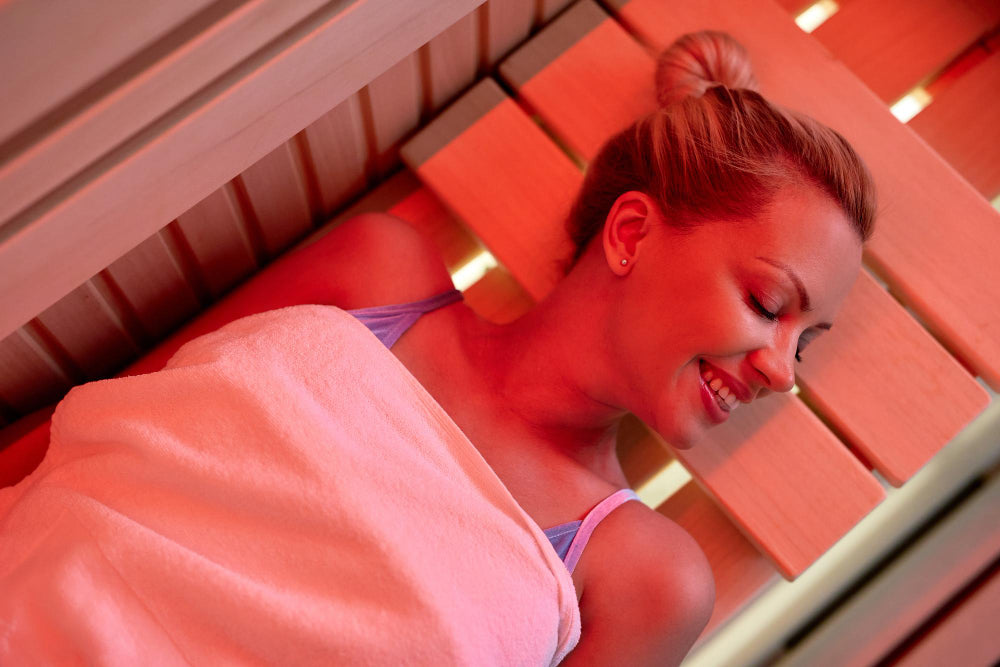
Unlike red light therapy, which often targets specific areas or larger bodies, infrared saunas offer a whole-body experience. Infrared saunas use infrared emitters to generate heat that directly warms the body without significantly raising the ambient temperature. These saunas can emit infrared light in three different spectra: near-infrared, mid-infrared, and far-infrared, each with different penetration depths and associated health benefits.
The heat from an infrared sauna penetrates deep into the tissue and promotes blood circulation, allowing the body to detoxify more effectively. Sweating helps eliminate toxins through the pores, making infrared saunas a popular method for detox treatments. Furthermore, it promotes muscle relaxation, leading to a reduction in muscle and joint pain. Many users also report improved sleep quality and a general feeling of well-being after regular use of an infrared sauna.
Comparison of the modes of action
Although both red light therapy and infrared saunas utilize light, the main difference lies in how the light is used. Red light therapy aims to improve cellular function through direct light absorption without significant heat generation. It is particularly precise in its application and can be used for specific medical and aesthetic treatments.
In contrast, the infrared sauna uses the heat of infrared light to warm the body comprehensively, resulting in deep relaxation and detoxification. This method is less targeted than red light therapy and is often used for general health and wellness treatments.
What suits me?
The choice between red light therapy and infrared sauna ultimately depends on individual health goals. While red light therapy is ideal for targeted treatments such as improving skin health or relieving specific pain points, infrared saunas offer a comprehensive way to enhance overall well-being and relax the body. Both methods are therefore valid and can be chosen according to individual needs and preferences.
For more information, please visit our website or contact us directly on the number 0521 759 837 0.


Leave a comment